How it works
Five steps. The third one is the one that matters.
Play it, answer it, find out exactly what you dropped, and fix that one thing. Then it makes sure you still know it in October.
Play the lesson
Theory, worked examples and diagrams, written to the SACE subject outline — read aloud to you, one idea at a time, with the slide changing when the narration does. On a laptop it also reads like an ordinary page, and with the sound off it is a deck you tap through on the bus.
Answer the question
Every lesson ends in real questions, in the style the subject actually asks them. Type your answer, or — if you worked it on paper, which for maths you will have — photograph your working and send that instead.
Get it marked, by the marks
Every mark that question was worth, checked one at a time. Each comes back a tick or a cross, with a sentence saying why. Usually under 7 seconds — no waiting until Thursday.
Fix the one you keep losing
Because every mark has a name, it can rank the ones you lose most often and link you straight back to the questions where they went. That list is your study plan — you did not have to write it.
Keep it
Each lesson makes recall cards. The deck brings one back on the day you were about to lose it and waits longer each time you get it right.
Step three, up close
Watch it mark one.
A Year 12 Biology question about mRNA, tRNA and rRNA. The answer covers two of the three — which is the kind of answer you actually write at eleven at night — so watch which mark it does not get, and what it says about it.
Describe the role of each of mRNA, tRNA and rRNA in protein synthesis.
Where the marks come from
Every mark the subject can award is written down before the course opens — one point each, defined once, for the whole subject. Your answer is checked against the ones that apply to the question in front of you.
Which is why it does not change its mind. The mark you lost on Monday is called the same thing on Friday, so “I keep losing this one” is something you can actually act on.
And what happens after you close the tab
Studying something once is not learning it. This is the part that turns a good Tuesday night into marks in October.
Step one, up close
Watch one play.
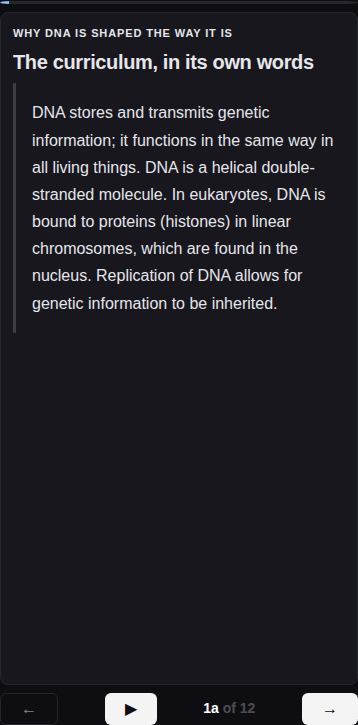
The opening of a Year 12 Biology lesson, at the pace a student gets it. Every frame is the real player and every second of sound is the recording that drives it — the slide changes when the narration ends, which is the platform’s own rule rather than a timing anybody chose.
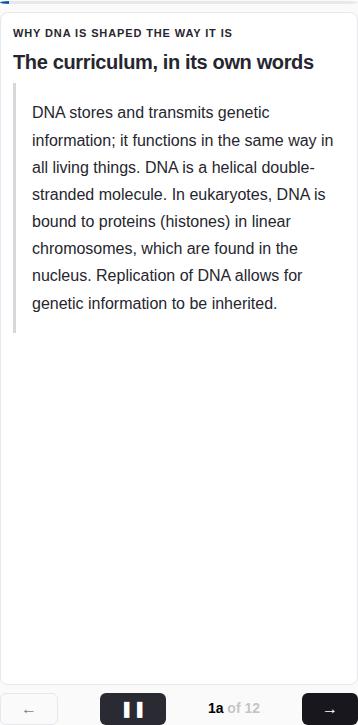
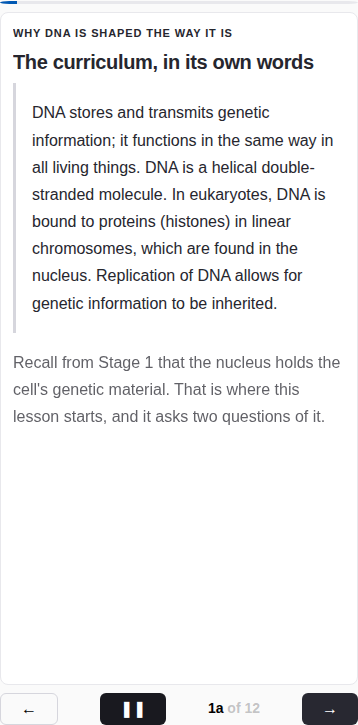
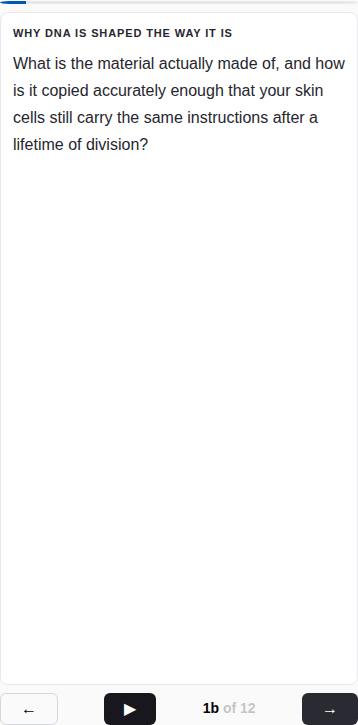
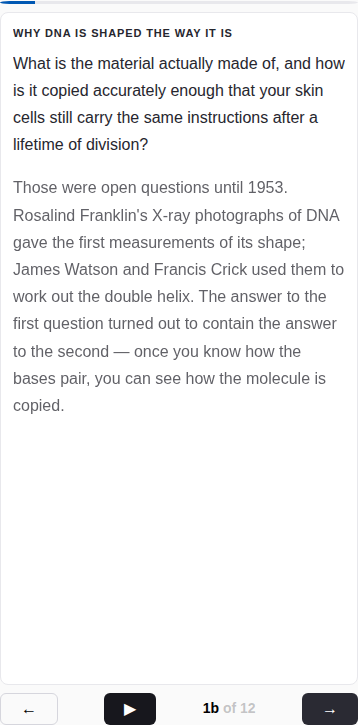
On a phone, which is where you actually are
Convinced? Join the list.
One email when Term 4, 2026 opens. Tell us which subject you need and we write that one first.